
Developing the individual
The Hardest and most important part of leadership
I could probably write endlessly about this topic. Most of what I’ve learned about developing people has come through 36 years of leadership experience and plenty of trial and error along the way. For me, this is one of the most important parts of leadership. And probably one of the hardest.
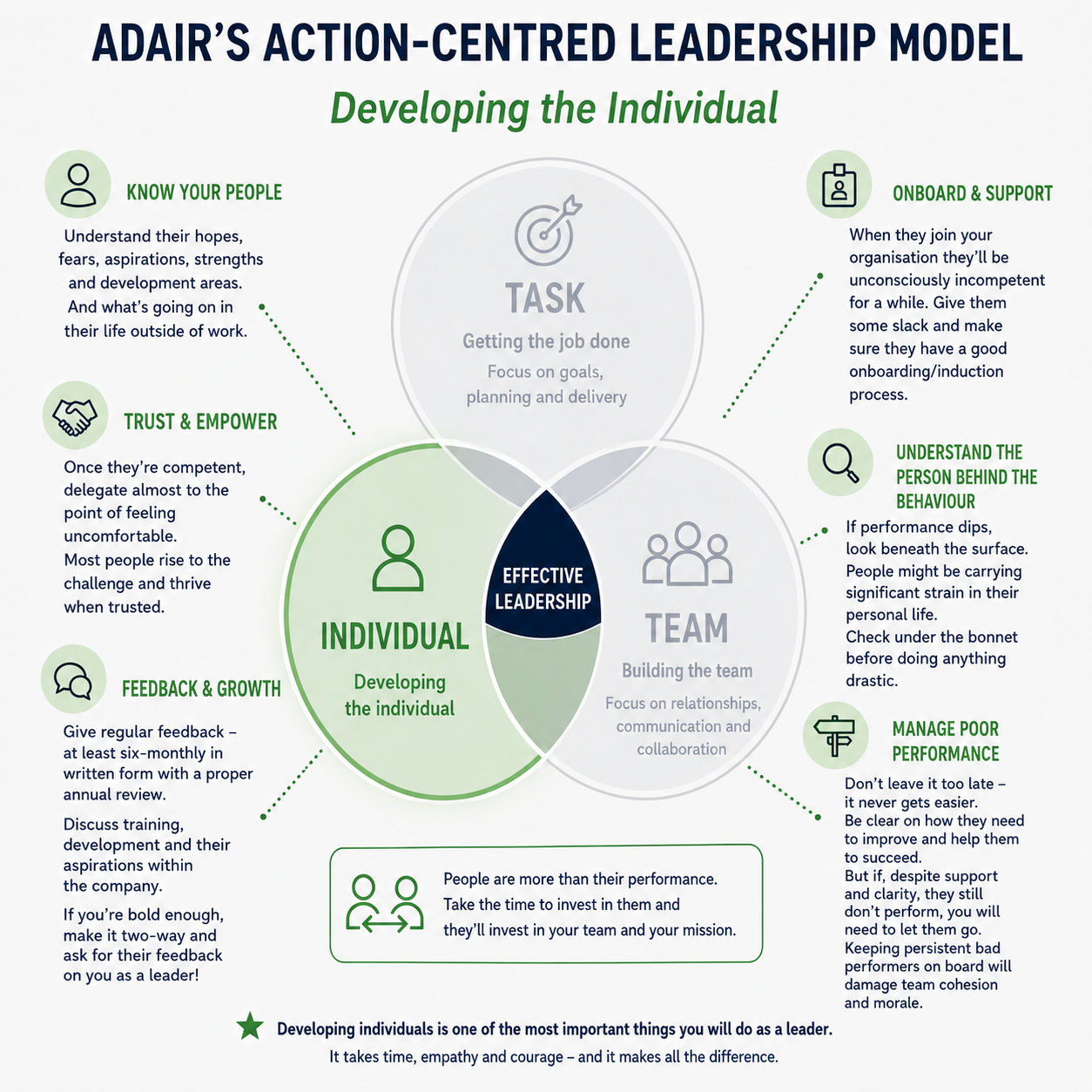
Because people are complicated.
First and foremost you must know your people
You need to understand the people you lead.
Not just what they do at work, but who they are.
What are their hopes, fears and aspirations?
What are their strengths?
Where do they need development?
What are they struggling with?
And sometimes, what’s happening outside work matters just as much as what’s happening inside it.
People rarely leave their personal life at the door.
If you genuinely want to develop individuals, you have to take the time to know them properly.
Give people time to grow
When someone first joins your organisation, they’ll often be unconsciously incompetent for a while.
That’s normal.
They’re learning the role, the culture, the systems and the people around them.
So give them some slack.
Invest in a good onboarding and induction process and support them properly in those early stages. Too many organisations throw people in at the deep end and then wonder why they struggle.
Trust and empower people
Once people become competent, trust them.
One of the mantras I always worked to was this: Delegate almost to the point of feeling uncomfortable.
That can be difficult as a leader, especially if you like control or feel responsible for everything.
But in my experience, most people rise to the challenge when they feel trusted and empowered. They thrive on responsibility far more than we sometimes expect.
And yes, occasionally people will make mistakes.
That’s part of development too.
Feedback matters
Feedback shouldn’t just happen once a year in a rushed appraisal meeting.
People need regular, honest conversations about how they’re doing, where they’re developing, and what they aspire to achieve.
I’ve always believed in proper written reviews at least every six months, with a more formal annual review process alongside ongoing conversations throughout the year.
And if you’re brave enough, make those conversations two-way. Ask for feedback on yourself as a leader too!
Sometimes those are the conversations where you learn the most.
The hardest part: managing poor performance
This is where leadership gets uncomfortable.
One thing I’ve learned over the years:
Don’t leave poor performance too late. It never gets easier.
If someone isn’t performing, they need clarity around expectations and support to improve. Good leaders help people succeed wherever possible.
But before jumping to conclusions, it’s important to look beneath the surface.
Sometimes people are carrying significant strain in their personal life that nobody else can see. Sometimes there are wellbeing issues, family pressures, confidence problems or things happening behind closed doors.
So check under the bonnet before doing anything drastic.
That doesn’t mean avoiding difficult decisions forever.
If somebody consistently isn’t performing despite support, clarity and opportunity, eventually you have to act. Keeping persistent poor performance unchecked will ultimately damage morale, trust and team cohesion.
Leadership is about people
Leadership would actually be much easier if it was only about tasks and plans.
But people aren’t machines.
They need support, challenge, encouragement, trust, accountability and compassion — often all at the same time.
That’s what makes leadership difficult.
And that’s also what makes it worthwhile.
If there’s one thing I’ve learned over the years, it’s this:
People are far more likely to invest in your mission when they know you’ve invested in them first.